Many people have a strong opinion on the importance of self-esteem in
children. Some people have a negative opinion and believe too much
emphasis is placed on self-esteem today. Other's believe strongly that
self-esteem development is crucial in children.
The truth is that
both parties have a share in the truth. There is probably too much
emphasis on self-esteem today and self-esteem development is crucial.
However middle ground can be found between the two groups. The emphasis
shouldn't be on building self-esteem but rather helping children learn
and grow so they naturally develop a feeling of worth and value.
Self-esteem
is a major key to success in life. The development of a positive
self-concept or healthy self-esteem is extremely important to the
happiness and success of children.
Self-esteem is how we feel
about ourselves, and our behavior clearly reflects those feelings. If
you child has high self-esteem she is likely to act independently,
assume responsibility, take pride in her accomplishments, tolerate
frustration, attempt new tasks and challenges, handle positive and
negative emotions, and offer assistance to others. If your child has low
self-esteem he will avoid trying new things, feel unloved and unwanted,
blame others for his own shortcomings, feel (or pretend to feel)
emotionally indifferent, be unable to tolerate a normal level of
frustration, put down his own talents and abilities, and be easily
influenced.
Parents have the most influence on their child's
self-esteem. Most parents do not realize how great an impact their words
and actions have on their child.
Be Quick With Praise
When
you feel good about your child, mention it to him. Parents are often
quick to express negative feelings to children but often don't get
around to describing positive feelings. A child doesn't know when you
are feeling good about him unless you tell him. He needs to hear you
tell him that you like having him in the family. Children remember
positive statements we say to them. They store them up and "replay"
these statements to themselves. Make a point of giving your child words
of encouragement throughout each day. Look for situations in which your
child is doing a good job, working hard, trying a new challenge,
overcoming a difficulty or displaying a talent.
Lay It On Thick
Be generous with your praise. Use what is called
descriptive praise rather than the general, such as "good job". For
example, during a recent swimming lesson my son was expected to swim the
length of the pool. He was frightened and didn't think he could make
it. When he successfully accomplished the goal I told him I was proud of
him for two things. One for trying even though he was afraid he'd fail
and two for pushing himself to reach his goal.
Make Them Talk The Talk
Teach
your child to practice making positive self-statements. Psychologists
have found that negative self-talk is frequently the root cause of
depression and anxiety. What we think determines how we feel about
ourselves and those feelings determine how we behave. This is the reason
it is important to teach children talk to themselves in a positive
manner. You can start them off by asking directed questions.
Avoid Name Calling
While
it is often important for parents to be critical, the focus should be
on the action you would like to see rather than the child. Rather than
calling a child a slob for keeping a messy room focus on the desired
action, which is to sort clothes and toys into their proper places.
Encourage the child by saying something like "I know you can get this
place ship shape by dinner" and reward them with specific praise "You
did a great job cleaning up your room".
Always Speak Of Your Child As If They Were Listening
Many
parents do a wonderful job of building up their child's self esteem
while spending time with the child. Then later they undo all their good
work and let the child overhear some negative comments. It is difficult
to explain away or undo this damage as you may well not even know when
it occurs. Obviously parents need to communicate with each other about
their children and adults often need to vent their frustrations. Just
make sure when you do so that your child is not able to overhear. Even a
child who is apparently concentrating on play will perk his ears when
he hears his name.
If you follow these five methods then your child's self esteem will grow.
Showing posts with label Parenting. Show all posts
Showing posts with label Parenting. Show all posts

When, What and How Do You Begin Teaching Your Preschooler
A while back LeeAnn from Las Vegas asked my opinion on just when is the
right time to begin teaching her 2-year-old daughter. She has already
begun teaching basic concepts such as alphabet, colors, and numbers, but
some members of her family feel that she is pushing her little girl.
In my opinion, the easiest way for LeeAnn to test whether or not she is pushing her daughter can be found in this quote: "Is it too soon, or should I let her keep going as long as she is interested and is having fun?"
If LeeAnn's daughter is interested in the concepts that she is learning and having fun while learning then it is definitely the right time to teach her.
Young children are interested in the world around them and they are interested in what their parents know. Building on that interest to teach basic concepts (just as LeeAnn is doing) is not pushing your child -- it is meeting your child's needs. One of the most important things you can do for your child is to offer an environment rich in learning opportunities. If you give your child the opportunity to learn then he will learn -- it really is as simple as that.
Remember, young children are learning a great deal about themselves, their family and caregivers, and their world ever day. For most of those lessons you are the teacher. By the time your child has reached the age of 2 you have already taught hundreds, even thousands, of important lessons about how to function in the world and society. Indeed, many of the everyday activities you perform with your child also have academic implications. For example, the books that you read to your child and the songs you sing with your child have a lasting impact on literacy. It is no great stretch to add other concepts into your repertoire and this can make a great deal of difference in how prepared your child is for preschool and kindergarten.
There are really only three things you should remember:
~ Keep it fun Making learning into a game and your child will always enjoys what you have to teach her.
~ Keep it light Educational products and activities that are actually games are wonderful but don't force your child into spending time each day with flashcards or the like. They'll most likely learn faster and more meaningfully if you have an alphabet scavenger hunt at the supermarket.
~ Embrace the teachable moment but don't schedule lessons and force educational activities on your child. When the opportunity presents itself (and it will countless times in a day!) take advantage and use it for a lesson. For example, simply putting on socks can be a lesson in right and left, colors, or counting!
HOW TO TEACH
So how do you teach your preschooler without scheduling lessons and forcing them to pay attention? You embrace the teachable moment!
What is the teachable moment? It is simply an opportunity that springs out of normal, everyday life or as children become older and more verbal a timely question or comment.
Time when you and your child are in the car, for example, is a wonderful teaching opportunity that many parents overlook. If you are reunited after a day's separation then you can share stories about your day-and in the process work on vocabulary and literacy skills as well as teach your child about the world around them. You can also use cars and trucks to teach colors, road signs to teach shapes, and so on.
Mealtimes are also wonderful teaching opportunities. Counting is easily worked into almost any meal, such as telling a child they can have two cookies or giving them five tater tots. Shapes and colors can also be brought into mealtimes. For example, my son likes to choose the shape for his sandwiches-triangles or squares? As a child grows older you can also do letter sounds with the various foods, such as milk starts with "mmmmh".
WHAT TO TEACH
Skills you should work on with your child fall into eight basic categories, according to early childhood educators:
~ Social/Emotional Skills, which will be the greatest predictors of success in life.
~ Self esteem, which is crucial for all learning.
~ Physical Skills
~ Communication Skills: listening, speaking, singing, drawing, gesturing
~ Basic Concepts such as colors, letters, numbers, vocabulary
~ Categorizing Skills, what is the same and different
~ Compare and Contrast Skills, which is the higher order level of Categorizing
~ Experiences on which to draw. These are perhaps the most important of all, as they provide a frame of reference for future learning. The more experiences from which a child can draw, the better s/he will understand both learning and the world.
These are all literacy skills and they are all key to your child's future success. If you need still more help identifying concepts that your child should master then study the developmental milestones for your child's age at http://PreschoolersLearnMore.com.
So rest easy, LeeAnn, you are doing exactly the right thing for your daughter!
In my opinion, the easiest way for LeeAnn to test whether or not she is pushing her daughter can be found in this quote: "Is it too soon, or should I let her keep going as long as she is interested and is having fun?"
If LeeAnn's daughter is interested in the concepts that she is learning and having fun while learning then it is definitely the right time to teach her.
Young children are interested in the world around them and they are interested in what their parents know. Building on that interest to teach basic concepts (just as LeeAnn is doing) is not pushing your child -- it is meeting your child's needs. One of the most important things you can do for your child is to offer an environment rich in learning opportunities. If you give your child the opportunity to learn then he will learn -- it really is as simple as that.
Remember, young children are learning a great deal about themselves, their family and caregivers, and their world ever day. For most of those lessons you are the teacher. By the time your child has reached the age of 2 you have already taught hundreds, even thousands, of important lessons about how to function in the world and society. Indeed, many of the everyday activities you perform with your child also have academic implications. For example, the books that you read to your child and the songs you sing with your child have a lasting impact on literacy. It is no great stretch to add other concepts into your repertoire and this can make a great deal of difference in how prepared your child is for preschool and kindergarten.
There are really only three things you should remember:
~ Keep it fun Making learning into a game and your child will always enjoys what you have to teach her.
~ Keep it light Educational products and activities that are actually games are wonderful but don't force your child into spending time each day with flashcards or the like. They'll most likely learn faster and more meaningfully if you have an alphabet scavenger hunt at the supermarket.
~ Embrace the teachable moment but don't schedule lessons and force educational activities on your child. When the opportunity presents itself (and it will countless times in a day!) take advantage and use it for a lesson. For example, simply putting on socks can be a lesson in right and left, colors, or counting!
HOW TO TEACH
So how do you teach your preschooler without scheduling lessons and forcing them to pay attention? You embrace the teachable moment!
What is the teachable moment? It is simply an opportunity that springs out of normal, everyday life or as children become older and more verbal a timely question or comment.
Time when you and your child are in the car, for example, is a wonderful teaching opportunity that many parents overlook. If you are reunited after a day's separation then you can share stories about your day-and in the process work on vocabulary and literacy skills as well as teach your child about the world around them. You can also use cars and trucks to teach colors, road signs to teach shapes, and so on.
Mealtimes are also wonderful teaching opportunities. Counting is easily worked into almost any meal, such as telling a child they can have two cookies or giving them five tater tots. Shapes and colors can also be brought into mealtimes. For example, my son likes to choose the shape for his sandwiches-triangles or squares? As a child grows older you can also do letter sounds with the various foods, such as milk starts with "mmmmh".
WHAT TO TEACH
Skills you should work on with your child fall into eight basic categories, according to early childhood educators:
~ Social/Emotional Skills, which will be the greatest predictors of success in life.
~ Self esteem, which is crucial for all learning.
~ Physical Skills
~ Communication Skills: listening, speaking, singing, drawing, gesturing
~ Basic Concepts such as colors, letters, numbers, vocabulary
~ Categorizing Skills, what is the same and different
~ Compare and Contrast Skills, which is the higher order level of Categorizing
~ Experiences on which to draw. These are perhaps the most important of all, as they provide a frame of reference for future learning. The more experiences from which a child can draw, the better s/he will understand both learning and the world.
These are all literacy skills and they are all key to your child's future success. If you need still more help identifying concepts that your child should master then study the developmental milestones for your child's age at http://PreschoolersLearnMore.com.
So rest easy, LeeAnn, you are doing exactly the right thing for your daughter!
What To Do About A Toddler Biting And Kicking
While it can be embarrassing, frustrating, and sometimes frightening, for the most part, this type of behavior by toddlers is a normal phase that they all pass through. It's a part of their growth and development, and usually results from a frustration at not being able to express themselves, whether it is wanting a toy, or wanting your attention.
The phase can hit anywhere from 14 months and up, but tends to be more noticeable when the child is exposed to others, which could mean in a childcare center, or social setting. Even children who are linguistically advanced for their ages, are still children, and will be prone to the same frustrations as others.
The first rule of thumb, is not to overreact. While there are different schools of thought on spanking, this is not a situation where it is appropriate, and can only add fuel to the fire. A time-out is in order, generally about two minutes worth on a chair where they can't stomp on the floor, or kick anything. This also gives you a chance to calm down. During the time-out, do not speak to them, but do explain when you sit them down, that this time-out is because they have bit/hit/kicked someone and that is not allowed.
When the time is up, explain to them again, that the behavior is not acceptable, because it hurts other people. It's not of much use to ask them how they would feel if someone bit them, since a toddler is unlikely to be able to relate cause and effect, then apply it to themselves. But a non-confrontational "punishment", and explanation, tells them what they did wrong, and what will happen if they do it again.
If they go right out and repeat the action, take them back for another time-out. Depending on the age of the child, you can explain the concept of apologies, and why they should make one. Use positive reinforcement by praising them for an apology (even if it comes as a kiss), or for going right out and giving their toy to the child they kicked.
The phase can hit anywhere from 14 months and up, but tends to be more noticeable when the child is exposed to others, which could mean in a childcare center, or social setting. Even children who are linguistically advanced for their ages, are still children, and will be prone to the same frustrations as others.
The first rule of thumb, is not to overreact. While there are different schools of thought on spanking, this is not a situation where it is appropriate, and can only add fuel to the fire. A time-out is in order, generally about two minutes worth on a chair where they can't stomp on the floor, or kick anything. This also gives you a chance to calm down. During the time-out, do not speak to them, but do explain when you sit them down, that this time-out is because they have bit/hit/kicked someone and that is not allowed.
When the time is up, explain to them again, that the behavior is not acceptable, because it hurts other people. It's not of much use to ask them how they would feel if someone bit them, since a toddler is unlikely to be able to relate cause and effect, then apply it to themselves. But a non-confrontational "punishment", and explanation, tells them what they did wrong, and what will happen if they do it again.
If they go right out and repeat the action, take them back for another time-out. Depending on the age of the child, you can explain the concept of apologies, and why they should make one. Use positive reinforcement by praising them for an apology (even if it comes as a kiss), or for going right out and giving their toy to the child they kicked.
The Ideas In Your Head Will Rule Your World
It does not matter where the ideas come from, and it doesn't matter whether they are right or wrong, once an idea is in your head, it will rule your world.
Only a few months ago I gave a keynote address to 3,000 people at a regional parenting conference. In the talk I had mentioned the difficulties parents face with Drug abuse by their children. During the question and answer period following my talk a clergyman stood up in front of and offered, "I think we need to decriminalize drugs because drug use is a victimless crime." He was offering this as a counter point to my comments in my address about how damaging drugs are to American youth.
My first reaction to this man's comment was sheer astonishment. I could not believe that Clergyman was willing to stand in front of all of these people and say that. Then I realized that he had an idea that was ruling his world. Not only did I disagree with him, but I also have a very different idea that rules my world.
I replied, "I disagree! I do not believe that drug use is a victimless crime! In my 29 years of teaching 46 kids who sat in my classroom are now dead."
And then continuing to address the fellow, I said, "Now, sir, please listen carefully to how those 46 young people died. Three of them died of causes that might not have been preventable. One boy died of a disease; one girl died when an airbag in a car exploded unexpectedly in her face during a slow moving accident in a shopping mall parking lot; and the third died in a private airplane crash while flying with his father.
But, sir, hold onto your seat and ask yourself if you still can consider drug use as a victimless crime when I tell you that the other 43 kids were either stoned, high, or drunk at the time that they died! Those kids were all victims of drug use! And that figure is just the tip of the iceberg. Every member of those kids' families, their friends, their teachers, their coaches, their pastors, and the other people who loved them were hurt by their drug use and were all victims, too!"
That clergyman had an idea that was ruling his world: He was willing to stake his personal reputation in front of 3,000 people on the idea that illicit drug use is victimless!
That idea was ruling his world! It did not matter to him what I had just said. The idea in his head was so powerful that he did not even listen to what I had said, rather, choosing to form a smart retort. I don't know where his idea came from and I am pretty sure his idea is wrong, but nonetheless it is ruling his world.
Ideas are powerful. Even wrong ideas are powerful. In the hands of an overzealous person a wrong idea can overpower a right idea.
As parents it is our job to help children to load their heads with strong ideas to use in making all of those decisions they are going to make. We must find ways to communicate those ideas in a manner that our children can use them.
One of the keys in communicating ideas to children lies in listening carefully to them. Lectures seldom pass on ideas to others. Two way communication is the best way to share ideas with kids. Allow children to challenge your ideas without becoming argumentative.
Good ideas are the vaccination against bad decisions. Vaccinate your children with your values and ethical thoughts.
Only a few months ago I gave a keynote address to 3,000 people at a regional parenting conference. In the talk I had mentioned the difficulties parents face with Drug abuse by their children. During the question and answer period following my talk a clergyman stood up in front of and offered, "I think we need to decriminalize drugs because drug use is a victimless crime." He was offering this as a counter point to my comments in my address about how damaging drugs are to American youth.
My first reaction to this man's comment was sheer astonishment. I could not believe that Clergyman was willing to stand in front of all of these people and say that. Then I realized that he had an idea that was ruling his world. Not only did I disagree with him, but I also have a very different idea that rules my world.
I replied, "I disagree! I do not believe that drug use is a victimless crime! In my 29 years of teaching 46 kids who sat in my classroom are now dead."
And then continuing to address the fellow, I said, "Now, sir, please listen carefully to how those 46 young people died. Three of them died of causes that might not have been preventable. One boy died of a disease; one girl died when an airbag in a car exploded unexpectedly in her face during a slow moving accident in a shopping mall parking lot; and the third died in a private airplane crash while flying with his father.
But, sir, hold onto your seat and ask yourself if you still can consider drug use as a victimless crime when I tell you that the other 43 kids were either stoned, high, or drunk at the time that they died! Those kids were all victims of drug use! And that figure is just the tip of the iceberg. Every member of those kids' families, their friends, their teachers, their coaches, their pastors, and the other people who loved them were hurt by their drug use and were all victims, too!"
That clergyman had an idea that was ruling his world: He was willing to stake his personal reputation in front of 3,000 people on the idea that illicit drug use is victimless!
That idea was ruling his world! It did not matter to him what I had just said. The idea in his head was so powerful that he did not even listen to what I had said, rather, choosing to form a smart retort. I don't know where his idea came from and I am pretty sure his idea is wrong, but nonetheless it is ruling his world.
Ideas are powerful. Even wrong ideas are powerful. In the hands of an overzealous person a wrong idea can overpower a right idea.
As parents it is our job to help children to load their heads with strong ideas to use in making all of those decisions they are going to make. We must find ways to communicate those ideas in a manner that our children can use them.
One of the keys in communicating ideas to children lies in listening carefully to them. Lectures seldom pass on ideas to others. Two way communication is the best way to share ideas with kids. Allow children to challenge your ideas without becoming argumentative.
Good ideas are the vaccination against bad decisions. Vaccinate your children with your values and ethical thoughts.
Childhood Obesity - Family Fight
Childhood obesity, as most people now know, is effected by many behavioral factors. In addition to the behavioral changes that may be required by changing the way your child eats and how much physical activity they engage in every day, you must observe at other factors in their behavior, and in the behavior of the teachers, coaches, family members and friends that surround your child.
A family is the nucleus cell that we all nourish and learn from, ideally a family is supportive and encouraging, this is usually true of parents, but the issue of siblings is completely different. If oyu feel that all members of the family do not act as one, on an active support that is ongoing and loving, you will need to make sure your family meetings and talks are devoted to getting everyone behind this.
If your child is overweight or obese, they need your support more than ever! Self-esteem and confidence issues abound in overweight children. Try not to criticize them, harp on them or berate them for their weight. Let your child know he is loved and appreciated and address his weight issue with positive confidence. Do not make jokes about your child situations, this is not the place in which humor helps, do not try and place blame on the child as this will probably result in the opposite of what you want. Simply let him know that you will work on this issue together and that there is nothing 'wrong with' him because he is overweight.
Make sure that you have a clear picture of your child life, at school, socially and elsewhere, if he is suffering from abuse from other children, even from his friends, or is suffering a more direct aggressive bullying problems. Work on rebuilding the child confidence by focusing on what he does well and by constantly reinforcing the idea that everyone is special and everyone has problems – he is no different, no better or worse than anyone else, no matter how little confidence he may have at this time. Keep the main focus on health and not esthetics, or weight, stress the importance of health. Focus on gradual changes in your family physical activity and nutrition and allow plenty of time for everyone to adjust and to feel good about the small changes they are making.
These are huge changes you need to make and the first baby steps are crucial for you and your child to feel that it is within your power to make the change, so pay careful attention to the start, as it may prove to be the most important part, with many teenagers the first step is the most important to recover their confidence and self esteem. Setting smaller goals will also allow your child to lose weight gradually and to 'grow into' their additional weight as they grow in height. Some children have a lot of weight to lose and they will have longer-term goals with lots of short-term milestones to keep them motivated. For these children, you may want to consider rewards or recognition.
I hope you found this information helpful, I wish you and you family the best of luck in reducing and fighting childhood obesity.
A family is the nucleus cell that we all nourish and learn from, ideally a family is supportive and encouraging, this is usually true of parents, but the issue of siblings is completely different. If oyu feel that all members of the family do not act as one, on an active support that is ongoing and loving, you will need to make sure your family meetings and talks are devoted to getting everyone behind this.
If your child is overweight or obese, they need your support more than ever! Self-esteem and confidence issues abound in overweight children. Try not to criticize them, harp on them or berate them for their weight. Let your child know he is loved and appreciated and address his weight issue with positive confidence. Do not make jokes about your child situations, this is not the place in which humor helps, do not try and place blame on the child as this will probably result in the opposite of what you want. Simply let him know that you will work on this issue together and that there is nothing 'wrong with' him because he is overweight.
Make sure that you have a clear picture of your child life, at school, socially and elsewhere, if he is suffering from abuse from other children, even from his friends, or is suffering a more direct aggressive bullying problems. Work on rebuilding the child confidence by focusing on what he does well and by constantly reinforcing the idea that everyone is special and everyone has problems – he is no different, no better or worse than anyone else, no matter how little confidence he may have at this time. Keep the main focus on health and not esthetics, or weight, stress the importance of health. Focus on gradual changes in your family physical activity and nutrition and allow plenty of time for everyone to adjust and to feel good about the small changes they are making.
These are huge changes you need to make and the first baby steps are crucial for you and your child to feel that it is within your power to make the change, so pay careful attention to the start, as it may prove to be the most important part, with many teenagers the first step is the most important to recover their confidence and self esteem. Setting smaller goals will also allow your child to lose weight gradually and to 'grow into' their additional weight as they grow in height. Some children have a lot of weight to lose and they will have longer-term goals with lots of short-term milestones to keep them motivated. For these children, you may want to consider rewards or recognition.
I hope you found this information helpful, I wish you and you family the best of luck in reducing and fighting childhood obesity.
Talking to Your Kids About Drugs: Why and How to Get the Dialogue Going
When you are a parent, there are many things to worry about. Keeping your kids safe is at the top of the list. First, you worry about the pacifier your infant dropped on the floor-so you pick it up and wash it with soap and water. Next, your toddler isn't eating enough vegetables, so you do your best to hide some veggies in his meat loaf. Then, you bite your nails as your second grader scales the tallest tree in the yard. You want to run and catch him when he starts to slip, but you see that he's beaming with excitement, so you stay watchful and quiet-careful not to spoil his fun.
As the kids grow older, the dangers they are faced with become more intense. One danger heavy on the minds of parents these days is substance abuse. And for good reason. With the popularity of "designer" drugs on the rise, and all the peer pressure kids are faced with, the worries parents encounter are mounting.
The Usual and Unusual Suspects
Sure, it's the usual suspects; experimenting with marijuana and alcohol that begin a pattern of self-destruction, but be aware, there are new drugs on the block, and they can be found in your medicine chest. According the Partnership for a Drug-Free America, the menu of drugs kids and teens are using is changing. They report 1 in 5 teens has tried Vicodin (a narcotic pain reliever) to get high, and 1 in 11 has admitted to getting high on cough medicine.
They also report a number of teens now "party" with other prescription and over-the-counter drugs. Along with the other illicit drugs out there that pose a dangerous risk to our kids, it's difficult not to be alarmed. The Partnership for a Drug-Free America (www.drugfree.org) is arming parents with need-to-know information about the risks of dangerous substances.
A local program reaching out
On the local front, there are programs that are taking action. Program coordinator for the Student Athlete Leadership Team (SALT), Paul Grafer, stresses the need for a proactive, honest dialogue between parents and their children about substance abuse. He oversees programs emphasizing leadership and character for young people in 40 districts in the New York Metropolitan area.
SALT trains thousands of high school athletes to serve as role models and mentors in their school districts to 5th graders. If you think 5th grade is too young to begin a dialogue about drugs-think again. National statistics show that the average age for experimentation with drugs and alcohol is 11 years old.
How does this program help? The SALT Program promotes healthy, positive behaviors and decisions. Included in this philosophy is a commitment to life long activeness and playing sports for enjoyment, health benefits, and to obtain life-skills; and, remaining substance abuse free by developing proactive, real-life refusal skills and strategies to navigate a culture of underage drug abusers (alcohol, tobacco, and steroids). The SALT Program is offered at Adelphi University in Garden City. For more information visit http://www.adelphi.edu/communityservices/sli/pdw.php
On Long Island
The grips of drugs are known to be prevalent on big city streets, but they are a problem here on Long Island. Suffolk County Police Officer Daryl Quinones explains, his experiences have given him great insight and compassion to those who are drug addicted and the knowledge that even experimenting with the "softer" drugs can easily lead a kid down a path of self-destruction and crime.
He suggests that parents must be truthful, and "lay it all out there' for kids to understand what may happen if they fall under the spell of drugs and alcohol and stresses the importance of speaking up before it's too late. "As a police officer I have spoken to teenagers about these issues upon parents' request," he says. "And on certain occasions, years down the road, I'll see the parents and they will thank me for turning the kid around." Quinones has seen the consequences when the child doesn't listen: they land out in the system for some drug related crime.
Expert Advice
So how do you get a child to listen? What do you say? When should you say it? I asked Dr. Susan Bartell, psychologist and author in Port Washington specializing in tween and teens, to shed some light on this important issue.
Q: What age do you recommend bringing up the issue?
A: You can start talking to kids about drugs beginning at six or seven--by talking about smoking cigarettes because that is something they see in their world and can understand that it is "bad".
As they get older (about ten) they can begin to understand the issue of other drugs. Middle school kids are ready for direct conversations, naming drugs (marijuana in particular) and explaining that they are illegal and dangerous.
Q: Can you give me some tips about how to make the "talk" go smooth?
A: With middle schoolers, look for a "teachable moment"...a TV anti-drug ad, a TV show when kids are drinking, smoking, using drugs and ask them what they think about it; then give your feelings in a low-keyed way, explaining that it is something you feel strongly about.
As kids get older--young high schoolers, the conversations need to begin to revolve around their social life: what would they do at a party if there was alcohol/drugs there. Help them come up with ways of handling it that aren't judgmental or critical.
Q: What's the biggest mistake parents make dealing with drug issues and their children?
A: They are too preachy, too critical of kids and don't give enough problem solving strategies. They also don't listen for their kids' concerns about how to handle peer pressure, or curiosity about drugs.
Q: How can parents be proactive about deterring their children from taking drugs?
A: First, being clear that you disapprove, next, making sure that you drive your child to and from parties or get-togethers--they'll be much less likely to use if they know you're picking them up. Don't let them get rides from other kids.
Q: Is there anything else parents need to know?
A: Conversations about drugs must include alcohol--which is also a drug and is actually usually the "Gateway" drug to others. Parents often feel that alcohol is okay, when in reality their kids can become alcoholics without them realizing it.
In addition, parents need to look for signs of chronic drug and alcohol use like: grades dropping, social isolation, secretive phone conversations, new friends that they don't let you meet; dropping old friends; sleeping a lot, changes in personality; sudden depression; sudden mood swings.
When it comes to raising kids today, it really does take a village. Keeping your child out of harm's way is no easy task, but experts agree that staying involved in you're your child's life-- is a great start. When they're young and scaling that tall tree, you stand back and let them giggle their way down, but when it comes to drugs, parents cant afford to be silent. There's too much at stake.
As the kids grow older, the dangers they are faced with become more intense. One danger heavy on the minds of parents these days is substance abuse. And for good reason. With the popularity of "designer" drugs on the rise, and all the peer pressure kids are faced with, the worries parents encounter are mounting.
The Usual and Unusual Suspects
Sure, it's the usual suspects; experimenting with marijuana and alcohol that begin a pattern of self-destruction, but be aware, there are new drugs on the block, and they can be found in your medicine chest. According the Partnership for a Drug-Free America, the menu of drugs kids and teens are using is changing. They report 1 in 5 teens has tried Vicodin (a narcotic pain reliever) to get high, and 1 in 11 has admitted to getting high on cough medicine.
They also report a number of teens now "party" with other prescription and over-the-counter drugs. Along with the other illicit drugs out there that pose a dangerous risk to our kids, it's difficult not to be alarmed. The Partnership for a Drug-Free America (www.drugfree.org) is arming parents with need-to-know information about the risks of dangerous substances.
A local program reaching out
On the local front, there are programs that are taking action. Program coordinator for the Student Athlete Leadership Team (SALT), Paul Grafer, stresses the need for a proactive, honest dialogue between parents and their children about substance abuse. He oversees programs emphasizing leadership and character for young people in 40 districts in the New York Metropolitan area.
SALT trains thousands of high school athletes to serve as role models and mentors in their school districts to 5th graders. If you think 5th grade is too young to begin a dialogue about drugs-think again. National statistics show that the average age for experimentation with drugs and alcohol is 11 years old.
How does this program help? The SALT Program promotes healthy, positive behaviors and decisions. Included in this philosophy is a commitment to life long activeness and playing sports for enjoyment, health benefits, and to obtain life-skills; and, remaining substance abuse free by developing proactive, real-life refusal skills and strategies to navigate a culture of underage drug abusers (alcohol, tobacco, and steroids). The SALT Program is offered at Adelphi University in Garden City. For more information visit http://www.adelphi.edu/communityservices/sli/pdw.php
On Long Island
The grips of drugs are known to be prevalent on big city streets, but they are a problem here on Long Island. Suffolk County Police Officer Daryl Quinones explains, his experiences have given him great insight and compassion to those who are drug addicted and the knowledge that even experimenting with the "softer" drugs can easily lead a kid down a path of self-destruction and crime.
He suggests that parents must be truthful, and "lay it all out there' for kids to understand what may happen if they fall under the spell of drugs and alcohol and stresses the importance of speaking up before it's too late. "As a police officer I have spoken to teenagers about these issues upon parents' request," he says. "And on certain occasions, years down the road, I'll see the parents and they will thank me for turning the kid around." Quinones has seen the consequences when the child doesn't listen: they land out in the system for some drug related crime.
Expert Advice
So how do you get a child to listen? What do you say? When should you say it? I asked Dr. Susan Bartell, psychologist and author in Port Washington specializing in tween and teens, to shed some light on this important issue.
Q: What age do you recommend bringing up the issue?
A: You can start talking to kids about drugs beginning at six or seven--by talking about smoking cigarettes because that is something they see in their world and can understand that it is "bad".
As they get older (about ten) they can begin to understand the issue of other drugs. Middle school kids are ready for direct conversations, naming drugs (marijuana in particular) and explaining that they are illegal and dangerous.
Q: Can you give me some tips about how to make the "talk" go smooth?
A: With middle schoolers, look for a "teachable moment"...a TV anti-drug ad, a TV show when kids are drinking, smoking, using drugs and ask them what they think about it; then give your feelings in a low-keyed way, explaining that it is something you feel strongly about.
As kids get older--young high schoolers, the conversations need to begin to revolve around their social life: what would they do at a party if there was alcohol/drugs there. Help them come up with ways of handling it that aren't judgmental or critical.
Q: What's the biggest mistake parents make dealing with drug issues and their children?
A: They are too preachy, too critical of kids and don't give enough problem solving strategies. They also don't listen for their kids' concerns about how to handle peer pressure, or curiosity about drugs.
Q: How can parents be proactive about deterring their children from taking drugs?
A: First, being clear that you disapprove, next, making sure that you drive your child to and from parties or get-togethers--they'll be much less likely to use if they know you're picking them up. Don't let them get rides from other kids.
Q: Is there anything else parents need to know?
A: Conversations about drugs must include alcohol--which is also a drug and is actually usually the "Gateway" drug to others. Parents often feel that alcohol is okay, when in reality their kids can become alcoholics without them realizing it.
In addition, parents need to look for signs of chronic drug and alcohol use like: grades dropping, social isolation, secretive phone conversations, new friends that they don't let you meet; dropping old friends; sleeping a lot, changes in personality; sudden depression; sudden mood swings.
When it comes to raising kids today, it really does take a village. Keeping your child out of harm's way is no easy task, but experts agree that staying involved in you're your child's life-- is a great start. When they're young and scaling that tall tree, you stand back and let them giggle their way down, but when it comes to drugs, parents cant afford to be silent. There's too much at stake.
Make Valentine's With Your Kids

Hearts and Hands Valentine
Here's what you need:
Construction paper (two different colors)
A pencil
Markers
Scissors
Glue
Here's what to do:
1. Trace your child's hand on a piece of construction paper with a pencil and then cut it out.
2. Draw a heart small enough to fit on the hand with a pencil and cut it out.
3. Glue the heart to the front of the hand.
4. Have your child write a special message inside the heart. "Happy Valentine's Day, Grandma! I love you with all my heart!"
This is a great card to make for Daddy.
Prim Valentine
Here's what you need:
Brown paper bag
Pencil
Markers
Scissors
Hole punch
Red or pink ribbon or yarn (about ¼" works best
Here's what to do:
1. Use a pencil to trace a large heart on a brown paper bag. Cut out the heart. You can use fancy scalloped scissors (like the ones used for scrapbooking) to jazz up the heart!
2. Make a series of holes around the edge of the heart using a hole punch. The number of holes isn't important, but be sure to make it an even number.
3. String the ribbon or yarn through the holes starting at the bottom of the heart working your way up. Tie the end pieces (which meet at the top of the heart) into a bow.
4. Have your child write a message on the inside of the heart or use stickers to decorate it and write the To: and From: on the back.
This card makes a great Valentine for Grandma.
You've probably had your child make special cards for a loved ones birthday. Why not for other special days, like Valentine's Day? Nothing says "I love you" like a homemade card, especially from a child. Be sure to remember special people to have your child make Valentine's for, like elderly neighbors and friends that have moved away.
Happy Valentine's Day!
Raising Up A Woman: My Daughter, My Heritage
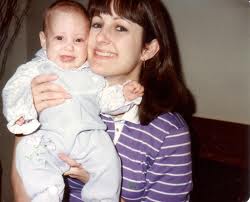
From her highchair, she gazes at me with admiration. Enchanting brown eyes follow me as I bustle about cleaning the handful of Honey Nut O's she's tossed on the floor.
She's a year old, gorgeous and her daddy's joy, and she's smiling so sweetly; at her tender age she's already taking in tidbits of information that will shape her into the woman she will eventually become. I can't help but think of the position I'm in. I have a huge responsibility to her.
By my example, my daughter, Alysia, will learn to respect herself and value her mind, body and spirit.
Through my actions, I'll teach her to make sensible choices. I'll advise her that people will judge her by her attire and by the company she keeps. I'll gently steer her away from anyone and everyone questionable in her life. I'll always be in the background watching, leading and guiding.
I'll take a strong interest in her abilities, and when she becomes an adult, I'll think highly of this stunning young woman with the amazing personality and numerous talents.
She is learning everyday, from the way I interact with her father, how to relate to men. She sees a loving union between us, and she will use it as a guide for her own relationships, but I will also instruct her on the benefits of using her head instead of her heart.
I'll rejoice when she makes the right choice in a mate, but I won't ridicule her if she makes the wrong choice. In fact, I hope to instill so much love in her that she will only attract loving and supportive people.
I'll always speak honestly about life because what I tell her from this point forward will shape the way she views the world. This is precious cargo, you see; an African-American youngster destined for great things.
And great she will be! I knew this the moment the ultrasound technician told me I would be blessed with her. I realized that being her mother would be the most important job I would ever have. I thought about how, if my husband and I instilled in her all the hard-knock lessons we've learned through the years, she would be tough, intelligent and well-rounded. She would be knowledgeable. I was more than ready for the challenge because, sadly, I've seen the other side
I know the mothers who'd rather invest more time in their latest boyfriends instead of spending time with their daughters.
I know the mothers who leave their daughters with whomever is willing to baby-sit, even the new boyfriend; a stranger. Too bad mom can't see that baby girl is afraid and would rather be home with her, secure and protected.
Unfortunately, I've seen those same daughters, who had so much potential, grow up and try hard to pull themselves out of the cycle of abuse and neglect to no avail. I've witnessed them reaching out for someone, anyone, to fill them up on the inside with the love distant mommy and absent daddy wouldn't spare. Sometimes they've reached out to the wrong crowd. Sometimes the end results were tragic.
Thankfully, I was raised with strong women in my life. I had aunts and grandmothers and my own mother who were excellent examples of what a nurturer should be.
My childhood wasn't perfect, but I revisit it with joy when I remember all the things mom helped me to accomplish. I learned invaluable life lessons from her. She was always nearby; she shaped me into the woman I am today.
I feel honored that I, too, have the opportunity to mold my princess into a queen and, one day, her own daughter will admire her from a distance. I'll be there also, embracing them both. My broad smile will be a declaration of triumph; our legacy of successful black women continuing.
Toddlers Who Stutter
Some parents have the shock of hearing their young child start to stutter as a toddler. I am somebody who runs a speech centre in Birmingham, England, I now help people to achieve fluency.
I met a lady who was thirty and her little boy aged four had been stuttering for quite a while. She had taken him to speech therapy and was extremely anxious as to why he was stuttering. It had possibly started because the toddlers father had quite a severe stutter, the boy may of picked up the bad habits this way.
Many other people contact me asking why their toddler has developed a stutter and asking what forms of stuttering treatments are available.
I always suggest that they keep as patient as they can and try to play games, speech games with their child. They can challenge the child to say the word fluently, they show their child how it should be said and then bet them that they can't do it themselves. When they do manage to say that particular word fluently they then heap lots of praise onto the child, telling them how clever they are and how proud mommy and daddy are of them. I even advise giving them an award like a small chocolate bar.
If instead of being patient parents or relatives are aggressive, saying things like: "Get your words boy" "Spit it out!" These types of comments can have a very negative effect and make that child withdraw into their shell. This may to some people seem very obvious to say, however you would not believe the amount of people who have told me this is what they were told as an infant.
I hope you found this article interesting and beneficial, if you have any questions please do not hesitate to contact me at info@stammering-stuttering.co.uk
Stephen Hill
I met a lady who was thirty and her little boy aged four had been stuttering for quite a while. She had taken him to speech therapy and was extremely anxious as to why he was stuttering. It had possibly started because the toddlers father had quite a severe stutter, the boy may of picked up the bad habits this way.
Many other people contact me asking why their toddler has developed a stutter and asking what forms of stuttering treatments are available.
I always suggest that they keep as patient as they can and try to play games, speech games with their child. They can challenge the child to say the word fluently, they show their child how it should be said and then bet them that they can't do it themselves. When they do manage to say that particular word fluently they then heap lots of praise onto the child, telling them how clever they are and how proud mommy and daddy are of them. I even advise giving them an award like a small chocolate bar.
If instead of being patient parents or relatives are aggressive, saying things like: "Get your words boy" "Spit it out!" These types of comments can have a very negative effect and make that child withdraw into their shell. This may to some people seem very obvious to say, however you would not believe the amount of people who have told me this is what they were told as an infant.
I hope you found this article interesting and beneficial, if you have any questions please do not hesitate to contact me at info@stammering-stuttering.co.uk
Stephen Hill
Child Identification- Thinking of Fingerprinting Your Children?
When speaking to parents about child identification, the first things that come to mind are fingerprints and DNA information. However, there seems to be a complete lack of awareness regarding fingerprints and the crucial need in updating them on a regular basis.
Most parents, with the exception of people who have studied medicine or criminology, believe that their children's fingerprints remain the same from birth to death.
We all believe our fingerprints to be as permanent as a tiger's stripes since they are formed before our birth, while in the womb. Though this is absolutely correct, here is the kicker; children's fingerprints are actually changing for the first five to seven years of their life.
The easiest way to explain this contradiction to you is with the following example; picture an under-inflated balloon with a picture on its surface, as this under-inflated balloon has air added to it, the picture becomes larger and becomes somewhat distorted.
With this in mind, think about the size of a newborn's fingers. Pretty darn tiny!
On average it takes children approximately eighteen to twenty one months before their very tiny fingerprints have developed enough to be of any use. We have all heard the expression "As smooth as a baby's bottom" this also applies to fingers!
That is why footprints are taken for children younger than twenty-one months of age.
Now getting back to our "balloon", think of your child's fingerprints as the picture on the balloon, as they grow older, their fingerprints, though they are actually changing, remain the same. One thing to keep in mind is that as your children grow older, their fingerprints might also change due to their skin's flexibility and also due to disfiguration caused by a scar(s).
When studying fingerprints, the authorities use certain identifying features or characteristic points: ridge endings, dots and bifurcations, in order to make a positive identification. With every passing year of your child's life, their fingers are growing in size, and these characteristic points become more pronounced, it becomes easier for the authorities to read your child's fingerprints.
For this reason, it is your task, as a responsible parent to update your child's fingerprints at least once a year. The thought of the fingerprints ever becoming useful is in itself a bone chilling one, for they are only used after the unimaginable has happened, passive identification. However, if needed, do you not want to provide the authorities with your child's the most accurate and easiest to distinguish identification?
Our next tidbit of advice is on the location in which parents keep their children's fingerprints. We recommend you keep them in a Ziploc baggie in the bottom of the freezer.
Here are some of the reasons for this suggestion:
- Your children do not play in the freezer and other than food nothing is kept in the freezer, therefore, you will always know exactly where they are.
- If you are not at home, you can easily direct a babysitter or neighbor to your freezer.
- Unlike a bank safety deposit box, you always have access to your freezer.
- Unlike a home safe or strong box, if in a state of panic, you don't have to try and remember a four, five or six digit combination, or try to explain to a babysitter how to open your safe.
Our logic behind this suggestion is; should the unthinkable ever happen, the minute the authorities knock on your door, you want to have your child's identification/fingerprint kit in their hands. Time is of the essence; you do not want to be tearing the house apart trying to remember where your child's fingerprints are.
Last tidbit; when leaving town on holidays, don't forget to pack your children's identification kit. Once again if something ever happened, your kids identification will not be of much use, two thousand miles away in your freezer.
Our fingerprints are completely unique, one of a kind! Identical twins do not have the same fingerprints, although they do share the same DNA.
Keep in mind, as you are now aware, fingerprints and DNA information will only ever be used after something happens. When looking for a Child ID provider, please remember the old adage "an ounce of prevention far outweighs a pound of cure", think "proactive".
Most parents, with the exception of people who have studied medicine or criminology, believe that their children's fingerprints remain the same from birth to death.
We all believe our fingerprints to be as permanent as a tiger's stripes since they are formed before our birth, while in the womb. Though this is absolutely correct, here is the kicker; children's fingerprints are actually changing for the first five to seven years of their life.
The easiest way to explain this contradiction to you is with the following example; picture an under-inflated balloon with a picture on its surface, as this under-inflated balloon has air added to it, the picture becomes larger and becomes somewhat distorted.
With this in mind, think about the size of a newborn's fingers. Pretty darn tiny!
On average it takes children approximately eighteen to twenty one months before their very tiny fingerprints have developed enough to be of any use. We have all heard the expression "As smooth as a baby's bottom" this also applies to fingers!
That is why footprints are taken for children younger than twenty-one months of age.
Now getting back to our "balloon", think of your child's fingerprints as the picture on the balloon, as they grow older, their fingerprints, though they are actually changing, remain the same. One thing to keep in mind is that as your children grow older, their fingerprints might also change due to their skin's flexibility and also due to disfiguration caused by a scar(s).
When studying fingerprints, the authorities use certain identifying features or characteristic points: ridge endings, dots and bifurcations, in order to make a positive identification. With every passing year of your child's life, their fingers are growing in size, and these characteristic points become more pronounced, it becomes easier for the authorities to read your child's fingerprints.
For this reason, it is your task, as a responsible parent to update your child's fingerprints at least once a year. The thought of the fingerprints ever becoming useful is in itself a bone chilling one, for they are only used after the unimaginable has happened, passive identification. However, if needed, do you not want to provide the authorities with your child's the most accurate and easiest to distinguish identification?
Our next tidbit of advice is on the location in which parents keep their children's fingerprints. We recommend you keep them in a Ziploc baggie in the bottom of the freezer.
Here are some of the reasons for this suggestion:
- Your children do not play in the freezer and other than food nothing is kept in the freezer, therefore, you will always know exactly where they are.
- If you are not at home, you can easily direct a babysitter or neighbor to your freezer.
- Unlike a bank safety deposit box, you always have access to your freezer.
- Unlike a home safe or strong box, if in a state of panic, you don't have to try and remember a four, five or six digit combination, or try to explain to a babysitter how to open your safe.
Our logic behind this suggestion is; should the unthinkable ever happen, the minute the authorities knock on your door, you want to have your child's identification/fingerprint kit in their hands. Time is of the essence; you do not want to be tearing the house apart trying to remember where your child's fingerprints are.
Last tidbit; when leaving town on holidays, don't forget to pack your children's identification kit. Once again if something ever happened, your kids identification will not be of much use, two thousand miles away in your freezer.
Our fingerprints are completely unique, one of a kind! Identical twins do not have the same fingerprints, although they do share the same DNA.
Keep in mind, as you are now aware, fingerprints and DNA information will only ever be used after something happens. When looking for a Child ID provider, please remember the old adage "an ounce of prevention far outweighs a pound of cure", think "proactive".
10 Parenting Tips For All New Parents
If you are like most parents, you probably want to raise healthy, smart kids. You may already have some ideas on how to achieve this. Here are some parenting tips that will help parents ensure their children develop to their full potential.
One of the parenting tips that work best is giving your children quantity and quality time. When you spend time with your kids, try to engage them in meaningful conversations. Try to build fun and healthy communications and relationships while the kids are young.
In many homes, parents do not really talk to their kids when they are young. But when the kids become teens, these parents desperately want to talk to their teens. But the opportunity is not there anymore. Try not to become average parents. According to statistics, an average American parent spends less than fifteen minutes a week in serious discussion with their children.
Practice and develop good habits. It is important that you push your kids to exercise their faith and put into action the lessons that they have received. For example, it is one thing to learn about charity and caring, but it is another thing to volunteer some time to visit nursing homes and serve the elderly. Or participate in building a house for the poor.
Aristotle, the famous Greek philosopher, said that virtues are acquired by the development of habits. At first it may feel like a duty to maintain good habits but it will become easier as time goes by, and soon they will exercise good habits effortlessly.
Be a good role model. It is hard trying to teach children something when we do not do it ourselves. When they hear you lying about something, what kind of message are you sending to your children? Because action speaks louder than words, your kids will probably imitate our good and bad habits more than listening to our words.
Be involved parents. Involved parents are parents who monitor their kids' media consumption, know whether the teachings in school are in line with their values and are acquainted with their friends. You should have a good rapport with your kids. Nobody is perfect but the more you become involved in your children's lives, the better your chances of raising them to be good citizens.
Have a strong and healthy relationship. Having a strong and healthy marriage or relationship is not only good for you but also for your children. A thriving family unit is a good deterrent for anti-social behavior.
One thing for sure: it is hard enough to raise a child with two parents, let alone a single parent. Research shows that two years after a divorce, many boys have trouble concentrating, do poorly on intelligence tests, and have difficulty with math. Should your relationship break down ensure that your children continue to have full support from both parents.
Get connected with other parents. We need support and encouragement from other parents and you'll no doubt learn new parenting tips from them. It is good to know that you are not the only ones who may be struggling. You can encourage one another to hang in there and continue to do the right thing.
One of the parenting tips that work best is giving your children quantity and quality time. When you spend time with your kids, try to engage them in meaningful conversations. Try to build fun and healthy communications and relationships while the kids are young.
In many homes, parents do not really talk to their kids when they are young. But when the kids become teens, these parents desperately want to talk to their teens. But the opportunity is not there anymore. Try not to become average parents. According to statistics, an average American parent spends less than fifteen minutes a week in serious discussion with their children.
Practice and develop good habits. It is important that you push your kids to exercise their faith and put into action the lessons that they have received. For example, it is one thing to learn about charity and caring, but it is another thing to volunteer some time to visit nursing homes and serve the elderly. Or participate in building a house for the poor.
Aristotle, the famous Greek philosopher, said that virtues are acquired by the development of habits. At first it may feel like a duty to maintain good habits but it will become easier as time goes by, and soon they will exercise good habits effortlessly.
Be a good role model. It is hard trying to teach children something when we do not do it ourselves. When they hear you lying about something, what kind of message are you sending to your children? Because action speaks louder than words, your kids will probably imitate our good and bad habits more than listening to our words.
Be involved parents. Involved parents are parents who monitor their kids' media consumption, know whether the teachings in school are in line with their values and are acquainted with their friends. You should have a good rapport with your kids. Nobody is perfect but the more you become involved in your children's lives, the better your chances of raising them to be good citizens.
Have a strong and healthy relationship. Having a strong and healthy marriage or relationship is not only good for you but also for your children. A thriving family unit is a good deterrent for anti-social behavior.
One thing for sure: it is hard enough to raise a child with two parents, let alone a single parent. Research shows that two years after a divorce, many boys have trouble concentrating, do poorly on intelligence tests, and have difficulty with math. Should your relationship break down ensure that your children continue to have full support from both parents.
Get connected with other parents. We need support and encouragement from other parents and you'll no doubt learn new parenting tips from them. It is good to know that you are not the only ones who may be struggling. You can encourage one another to hang in there and continue to do the right thing.
Educational Videos And Your Child's Development
There is much to be said about how much television is too much television for children. As parents we are constantly reminded that our children should not be watching television at all. We hear about the risks of Attention Deficit Disorder, overall disobedience, and many other terrible consequences. I don't disagree completely, but I do believe this topic needs to be discussed in greater detail.
I have a two year old son. I allow him to watch certain television shows and/or videos. Do I use the television as a babysitter or some other form of replacement for my presence? Never. I choose these programs carefully, ensuring that what they project is in accordance with what I want my son to learn. I use the television shows as reinforcement for the tools and lessons I am already teaching him AND I always watch his videos with him in order to help clarify or repeat words if necessary. Let me share with you an example.
Ever since my son had the dexterity to be able to point to the different parts of his body, my husband and I have been rehearsing the corresponding words for him to learn. Over and over and over we repeat these words. We also use children's books to share these same words. Throw in a couple videos of kids singing "Head, Shoulders, Knees, and Toes" and you have a child who can put all these images and words together. I am NOT saying that the video was the key ingredient that taught my son these words. I am saying that children, just like adults, learn in a number of different ways. Why not introduce them to the world around them through various types of media. I believe the combination of books, imaginary play, music, and the right television programs can assist children in learning more than just one of these avenues by itself.
I also believe children learn by watching other children. If you don't believe me, spend a few hours at your local preschool sometime and just observe. You'd be amazed at how children (toddlers especially) imitate one another. In my case, my son is still an only child at this time. I do my best to take him to play groups, tumbling class, and any other socialization activity I can get him to. When he is around other children, I can see an increased desire from him to want to communicate with the other children – moreso than even his need to communicate with me! Having said that, he still spends the majority of his time without the company of other children. We own several children's videos (and watch special television programs) that involve children his age and slightly older. He is able to see these children interact, communicate, dance, sing, and even display their good manners. These programs have been a positive enhancement to the social skills my son has picked up at home and at play.
The bottom line to this discussion is not whether television in and of itself is evil and should be kept as far from children as possible. It boils down to WHAT children are watching, how the programs are playing a part in the child's overall learning curriculum (is it the only source or is it a supplement to many other resources?), and the importance of having the child's caregiver nearby to interact along with the program. I take an active part in watching television programs with my son so we can learn and have fun together.
I realize everyone has their own views about watching television and I'm definitely no expert, but this has worked in my home and I hope by sharing my experience that you will be able to gain a little something from it. Best wishes in parenting!
I have a two year old son. I allow him to watch certain television shows and/or videos. Do I use the television as a babysitter or some other form of replacement for my presence? Never. I choose these programs carefully, ensuring that what they project is in accordance with what I want my son to learn. I use the television shows as reinforcement for the tools and lessons I am already teaching him AND I always watch his videos with him in order to help clarify or repeat words if necessary. Let me share with you an example.
Ever since my son had the dexterity to be able to point to the different parts of his body, my husband and I have been rehearsing the corresponding words for him to learn. Over and over and over we repeat these words. We also use children's books to share these same words. Throw in a couple videos of kids singing "Head, Shoulders, Knees, and Toes" and you have a child who can put all these images and words together. I am NOT saying that the video was the key ingredient that taught my son these words. I am saying that children, just like adults, learn in a number of different ways. Why not introduce them to the world around them through various types of media. I believe the combination of books, imaginary play, music, and the right television programs can assist children in learning more than just one of these avenues by itself.
I also believe children learn by watching other children. If you don't believe me, spend a few hours at your local preschool sometime and just observe. You'd be amazed at how children (toddlers especially) imitate one another. In my case, my son is still an only child at this time. I do my best to take him to play groups, tumbling class, and any other socialization activity I can get him to. When he is around other children, I can see an increased desire from him to want to communicate with the other children – moreso than even his need to communicate with me! Having said that, he still spends the majority of his time without the company of other children. We own several children's videos (and watch special television programs) that involve children his age and slightly older. He is able to see these children interact, communicate, dance, sing, and even display their good manners. These programs have been a positive enhancement to the social skills my son has picked up at home and at play.
The bottom line to this discussion is not whether television in and of itself is evil and should be kept as far from children as possible. It boils down to WHAT children are watching, how the programs are playing a part in the child's overall learning curriculum (is it the only source or is it a supplement to many other resources?), and the importance of having the child's caregiver nearby to interact along with the program. I take an active part in watching television programs with my son so we can learn and have fun together.
I realize everyone has their own views about watching television and I'm definitely no expert, but this has worked in my home and I hope by sharing my experience that you will be able to gain a little something from it. Best wishes in parenting!
Parenthood And Long Hair
If they don't cut their hair in pregnancy, many women cut their hair shorter after the baby is born. The reason, as always, is that it's easier to deal with.
If you think about it, though, long hair may not require that much extra effort when compared to short hair. You'll spend less time getting it cut at the salon, which can be nice when you have to fit that in around your children's schedules. Brushing your hair only takes a little longer for well-maintaned long hair than it does for shorter hair.
Pulling the hair back in a ponytail is easy and practical for any hair that is long enough for that style. I've always been fond of braiding my hair when I need a lot of control.
Children love long hair. My daughter is always asking me to brush her hair long, "like Rapunzel's." My kids would be shocked if I cut my hair.
But what about those hectic days when you have a hard time even getting into the shower? Isn't long hair inconvenient then?
It doesn't have to be. Twist your hair up into a knot if you don't absolutely have to brush it and you won't have to wait for it to dry. My hair needs washing only about every other day before I start to notice an oily feeling… occasionally daily in summer due to the heat, and sometimes I suspect I could get away with washing it less in winter if I were in THAT much of a hurry. It's just so nice to get out of the shower some days, feeling clean, but not needing to worry about drying my hair.
Moms do not have to have short hair. It's common practice these days, but it's nice to stand out in a way you won't regret later. I often get envious comments from other moms, and meeting other long haired moms is fun. No, we don't talk about having long hair all the time… occasionally share care or styling tips, but I think most women do that anyhow. It's just a little something we automatically know we have in common.
Keeping your hair long is also a great way to feel feminine. My husband and I knew each other for years before we married, but had lost contact for a time, during which I grew my hair out. His first comment on seeing me after 5 years apart, aside from general hellos was "I love your hair." I don't say that's the only reason we got back together, not by a long shot, but it sure didn't hurt. He'd be quite disappointed if I cut my hair. Few men can resist long hair. When you're a parent and sometimes there aren't many ways to show your feelings, little things like teasing him with long hair works quite nicely.
If you think about it, though, long hair may not require that much extra effort when compared to short hair. You'll spend less time getting it cut at the salon, which can be nice when you have to fit that in around your children's schedules. Brushing your hair only takes a little longer for well-maintaned long hair than it does for shorter hair.
Pulling the hair back in a ponytail is easy and practical for any hair that is long enough for that style. I've always been fond of braiding my hair when I need a lot of control.
Children love long hair. My daughter is always asking me to brush her hair long, "like Rapunzel's." My kids would be shocked if I cut my hair.
But what about those hectic days when you have a hard time even getting into the shower? Isn't long hair inconvenient then?
It doesn't have to be. Twist your hair up into a knot if you don't absolutely have to brush it and you won't have to wait for it to dry. My hair needs washing only about every other day before I start to notice an oily feeling… occasionally daily in summer due to the heat, and sometimes I suspect I could get away with washing it less in winter if I were in THAT much of a hurry. It's just so nice to get out of the shower some days, feeling clean, but not needing to worry about drying my hair.
Moms do not have to have short hair. It's common practice these days, but it's nice to stand out in a way you won't regret later. I often get envious comments from other moms, and meeting other long haired moms is fun. No, we don't talk about having long hair all the time… occasionally share care or styling tips, but I think most women do that anyhow. It's just a little something we automatically know we have in common.
Keeping your hair long is also a great way to feel feminine. My husband and I knew each other for years before we married, but had lost contact for a time, during which I grew my hair out. His first comment on seeing me after 5 years apart, aside from general hellos was "I love your hair." I don't say that's the only reason we got back together, not by a long shot, but it sure didn't hurt. He'd be quite disappointed if I cut my hair. Few men can resist long hair. When you're a parent and sometimes there aren't many ways to show your feelings, little things like teasing him with long hair works quite nicely.
Comfortable Tanning Bed Pillows
People who wanted to acquire that exotic dark olive skin anytime of the year are thankful for the technology of tanning beds. Tanning beds provide controlled doses of ultraviolet radiation sufficient to activate melanin on the skin. Yet, when a person gets inside the tanning bed, he lies uneasily. The whole twenty-minute stay in the tanning bed can be unpleasant.
This is because it is difficult to find a comfortable position on top of a hard surface. Some users of tanning beds try to ignore this fact and console themselves with the phrase "no pain, no glory". But others wonder if there can be a way to use the tanning bed more luxuriously.
Fortunately, there is a way. Technology has never stopped finding ways to make every human activity convenient and comfortable. And one of the products of technology is the "tanning bed pillow". Tanning bed pillows are specially designed to complement tanning beds. These are produced so that a person may use the tanning bed comfortably without interfering with the process of indoor tanning.
At present, there are two types of tanning bed pillows: the polymeric urethane pillows and the porous foam pillows. The polymeric urethane pillows have relatively steady or firm contours. These pillows can provide a dependable cradle for the whole body, making the indoor tanning experience pleasant. On the other hand, the porous foam pillows are known for their durability. These pillows can be used longer and more often. Owners of residential tanning beds prefer the porous foam pillows for another reason. That is, these pillows take less effort to clean and maintain.
Whichever type of tanning bed pillow a person finally decides to purchase, he can look forward to a more appealing stay in his tanning bed. He will no longer endure an unpleasant position each time he uses his tanning bed.
Both types of tanning bed pillows can be ordered online. Some quality pillows can be bought at less than $10. Some suppliers offer tanning bed pillows as part of a package when a customer purchases tanning beds and tanning bed lotions. These three products, along with extra tanning bulbs and cleaning solution, make up one set of indoor tanning equipment.
With the advent of tanning bed pillows, getting a tan can be a pleasurable experience. A person can relax and lie luxuriously in his tanning bed while waiting for the timer to give the signal that the tanning session is over. And then, this person will begin to sport that attractive dark olive skin.
This is because it is difficult to find a comfortable position on top of a hard surface. Some users of tanning beds try to ignore this fact and console themselves with the phrase "no pain, no glory". But others wonder if there can be a way to use the tanning bed more luxuriously.
Fortunately, there is a way. Technology has never stopped finding ways to make every human activity convenient and comfortable. And one of the products of technology is the "tanning bed pillow". Tanning bed pillows are specially designed to complement tanning beds. These are produced so that a person may use the tanning bed comfortably without interfering with the process of indoor tanning.
At present, there are two types of tanning bed pillows: the polymeric urethane pillows and the porous foam pillows. The polymeric urethane pillows have relatively steady or firm contours. These pillows can provide a dependable cradle for the whole body, making the indoor tanning experience pleasant. On the other hand, the porous foam pillows are known for their durability. These pillows can be used longer and more often. Owners of residential tanning beds prefer the porous foam pillows for another reason. That is, these pillows take less effort to clean and maintain.
Whichever type of tanning bed pillow a person finally decides to purchase, he can look forward to a more appealing stay in his tanning bed. He will no longer endure an unpleasant position each time he uses his tanning bed.
Both types of tanning bed pillows can be ordered online. Some quality pillows can be bought at less than $10. Some suppliers offer tanning bed pillows as part of a package when a customer purchases tanning beds and tanning bed lotions. These three products, along with extra tanning bulbs and cleaning solution, make up one set of indoor tanning equipment.
With the advent of tanning bed pillows, getting a tan can be a pleasurable experience. A person can relax and lie luxuriously in his tanning bed while waiting for the timer to give the signal that the tanning session is over. And then, this person will begin to sport that attractive dark olive skin.
Baby Gates Flexibility And Warning
Baby gates keep your babies and toddlers safe.
But remember that they are not the only ones who will be using the baby gate. Older children as well as parents in the house will at some point need to pass these gates. That is why it is very important that you get a gate that is easy to open and close firmly. Do your best not to step over the gate, particularly when the youngster being protected is watching. You don't want the child to learn a bad habit.
Flexible Baby Gates.
When thinking of baby gates we usually imagine wood or metal barriers. Not all safety barriers are made out of these materials. Some are made from Plexiglas or high-strength fabrics. As an example, the Kiddy Guard safety barrier protects children up to the age of two.
Baby Gates can be used in doorways and stairways, and normally expands up to 51 inches. The Kiddy Guard fits inside a doorframe or between two walls and is retractable when not in use, making it quite a flexible barrier.
The hardware-mounted gates are attached with screws to walls and banisters. These gates typically open and close much like a door. This makes them more suitable for areas you'll be walking through frequently. They can be mounted between two walls, two banisters or a banister and a wall. Hardware-mounted gates are intended to be installed into a solid wood surface. If your doorway or opening is already framed in wood you can install the gate without any preparation. If not, you'll have to install a Gate Mounting Kit, obtainable where you buy baby gates.
Baby Gate Warning.
When looking for the right baby gate, it's vital to remember than some gates themselves are dangerous. As an example, accordion-style baby gates with large V-shaped openings along the top edge and diamond-shaped openings between the slats are a strangulation risk. Children who have tried crawling through these gates have died when their heads got trapped in the V-shaped or diamond-shaped openings. The hazardous accordion-style baby gates have not been sold since 1985, though you may still find them at yard sales or in thrift stores, so be alert!
But remember that they are not the only ones who will be using the baby gate. Older children as well as parents in the house will at some point need to pass these gates. That is why it is very important that you get a gate that is easy to open and close firmly. Do your best not to step over the gate, particularly when the youngster being protected is watching. You don't want the child to learn a bad habit.
Flexible Baby Gates.
When thinking of baby gates we usually imagine wood or metal barriers. Not all safety barriers are made out of these materials. Some are made from Plexiglas or high-strength fabrics. As an example, the Kiddy Guard safety barrier protects children up to the age of two.
Baby Gates can be used in doorways and stairways, and normally expands up to 51 inches. The Kiddy Guard fits inside a doorframe or between two walls and is retractable when not in use, making it quite a flexible barrier.
The hardware-mounted gates are attached with screws to walls and banisters. These gates typically open and close much like a door. This makes them more suitable for areas you'll be walking through frequently. They can be mounted between two walls, two banisters or a banister and a wall. Hardware-mounted gates are intended to be installed into a solid wood surface. If your doorway or opening is already framed in wood you can install the gate without any preparation. If not, you'll have to install a Gate Mounting Kit, obtainable where you buy baby gates.
Baby Gate Warning.
When looking for the right baby gate, it's vital to remember than some gates themselves are dangerous. As an example, accordion-style baby gates with large V-shaped openings along the top edge and diamond-shaped openings between the slats are a strangulation risk. Children who have tried crawling through these gates have died when their heads got trapped in the V-shaped or diamond-shaped openings. The hazardous accordion-style baby gates have not been sold since 1985, though you may still find them at yard sales or in thrift stores, so be alert!
How Parents Can Affect Their Children's Weight
Recent studies have shown that there is an increasing trend in the number of overweight and obese children. In fact, there are estimates that say up to 15% of the children in UK fit this description. It is a sad fact, to say the least. Some experts go so far as to say that because of the children's bad eating habits and lack of exercise, more and more parents will end up burying their own
children.
So, what can the parents do about this? Here are eight thoughts to ponder and hopefully take action on.
Obesity and excess weight gain are usually a direct result of poor eating habits and lack of exercise. The key here is to provide your child with a balanced healthy diet and encourage physical activities.
Realize that not all overweight issues are hereditary. Many experts say that in reality, only a small percent of obesity and weight gain can be attributed to heredity….. So don't automatically blame your genes!
Children often mimic the bad eating habits and inactivity of their parents. Therefore set an example by eating balanced meals and exercising regularly. When the children are very young, they will want to eat what is on your plate. What better time is there to start some good eating habits yourselves?
Encourage your children to walk more and take part in physical activities. Parents do not need to continually drive their children everywhere when they can easily walk there. Also, monitor the time they spend in front of the television. How does this compare to the time they spend outside playing or participating in some physical activities?
Minimize fast food, sweets, and convenience meals. They are all high in calories and full of salt and sugar. They are cheap, available and targeted to our children through television, so beware.
Luckily it is easier to change a child's eating habits than it is to change an adults. If you are concerned about your child's weight you should encourage them to eat a variety of fresh foods that are nutritious. You should also replace foods that are high in fat such as cookies, chocolate, and cakes with alternatives that are healthy such as fresh fruit, wholegrain bread or crackers.
The way you cook (and shop) also has an effect on their (and your) weight. That is, grill or bake foods rather than fry them. Watch the types of carbohydrates you eat. Buy fresh fruit juices rather than sodas. Start their day with low sugar cereals. Minimize the amount of sweets (chocolate) in the house and substitute, instead, things like dried fruits, nuts and granola.
Develop good eating habits. To prevent children grazing all day, provide them with regular meals at set, routine times. Don't allow your child to each while they do homework or watch television.
Use mealtimes as an opportunity for the family to sit together at a table. Encourage your child to listen to what their stomachs tell them so they learn to only eat when they are hungry as opposed to eating out of habit.
Teach your child to chew their food thoroughly and eat at a slower pace so they savor and appreciate their food.
Ask your child to assist you when you are preparing food so they are more interested and aware of what they are eating. A child who has helped prepare a healthy meal is more likely to eat it. Encourage older children to keep a food diary to identify the times they are likely to snack.
There you have eight points on how the parent can influence the eating habits of their children, which in turn, should positively affect the child's weight gain.
children.
So, what can the parents do about this? Here are eight thoughts to ponder and hopefully take action on.
Obesity and excess weight gain are usually a direct result of poor eating habits and lack of exercise. The key here is to provide your child with a balanced healthy diet and encourage physical activities.
Realize that not all overweight issues are hereditary. Many experts say that in reality, only a small percent of obesity and weight gain can be attributed to heredity….. So don't automatically blame your genes!
Children often mimic the bad eating habits and inactivity of their parents. Therefore set an example by eating balanced meals and exercising regularly. When the children are very young, they will want to eat what is on your plate. What better time is there to start some good eating habits yourselves?
Encourage your children to walk more and take part in physical activities. Parents do not need to continually drive their children everywhere when they can easily walk there. Also, monitor the time they spend in front of the television. How does this compare to the time they spend outside playing or participating in some physical activities?
Minimize fast food, sweets, and convenience meals. They are all high in calories and full of salt and sugar. They are cheap, available and targeted to our children through television, so beware.
Luckily it is easier to change a child's eating habits than it is to change an adults. If you are concerned about your child's weight you should encourage them to eat a variety of fresh foods that are nutritious. You should also replace foods that are high in fat such as cookies, chocolate, and cakes with alternatives that are healthy such as fresh fruit, wholegrain bread or crackers.
The way you cook (and shop) also has an effect on their (and your) weight. That is, grill or bake foods rather than fry them. Watch the types of carbohydrates you eat. Buy fresh fruit juices rather than sodas. Start their day with low sugar cereals. Minimize the amount of sweets (chocolate) in the house and substitute, instead, things like dried fruits, nuts and granola.
Develop good eating habits. To prevent children grazing all day, provide them with regular meals at set, routine times. Don't allow your child to each while they do homework or watch television.
Use mealtimes as an opportunity for the family to sit together at a table. Encourage your child to listen to what their stomachs tell them so they learn to only eat when they are hungry as opposed to eating out of habit.
Teach your child to chew their food thoroughly and eat at a slower pace so they savor and appreciate their food.
Ask your child to assist you when you are preparing food so they are more interested and aware of what they are eating. A child who has helped prepare a healthy meal is more likely to eat it. Encourage older children to keep a food diary to identify the times they are likely to snack.
There you have eight points on how the parent can influence the eating habits of their children, which in turn, should positively affect the child's weight gain.
The Great Diaper Debate

All that changed with the advent of disposable diapers. Even the unfitted, flat, uncomfortable first generation disposables were worlds above typical cloth diapers for convenience and ease of use. Just unfold the back, pull the plastic up between the baby's legs and smooth it against his belly, and tape the back to the front. Voila! Instant diaper. Even better - no need for washing. No dirty diapers soaking in a pail of borax. No smell, no fuss, no laundry service - just un-tape, wrap the diaper up and toss it in the trash.
For mothers of my generation, Pampers was the dividing line between 'back then' and now. I can't count the number of mothers, grandmothers, aunts and older female relatives who started off a tale with 'Of course, we never had Pampers, WE had to..."
The advantages were obvious: disposables were cleaner, more sanitary, more convenient. They did away with hours and hours of laundering and drying, making time for lots of other things. If you were the least bit conscious of disposal, you could completely eliminate the dirty-diaper smell - just wrap it up tight in a plastic bag in put it in the OUTSIDE trash. And no more wrestling with a squirming baby while you tried to pin his nappy closed, nor having the whole thing slip off his adorable little butt because you missed a layer of cloth when pinning.
The disadvantages were not so readily apparent, but they were nonetheless real. The major point against disposable diapers is a potent one: disposable diapers may be great for mother, but they put an enormous strain on Mother Earth. Some facts:
* Over 19 billion disposable diapers annually end up in landfills - where they do not degrade.
* Disposable diaper makers use more than a million tons of wood pulp every year.
* The manufacturing process creates waste that contains dioxins, heavy metals and industrial solvents.
In a world with limited resources, disposable diapers consume resources and create pollutants and hazardous chemicals. Is the convenience worth the damage to the Earth?
On the face of it, the debate does seem to be one more instance of man - in this case mommies - putting their own convenience above what's best for the world.
But there's yet another side to the debate - disposable diaper.
Parent's Involvement in Children's Education
ABSTRACT
The importance of parental involvement as an accelerating and motivating factor in their children's education is a worldwide-accepted fact. This research project provides an in depth explanation along with specific reasons, the importance of parents' involvement in their children's education. It also discusses the parenting techniques, their types and their consequences if neglected. It also describes the ways to measure the outcome of the positive parental involvement. Furthermore, it mentions the teachers involvement and the difficulties faced by the teachers in getting parents involved in their children's (this is further supported by the examples of two teachers who with their deliberate efforts won the parents over to devote their maximum attention towards their children), single-parent involvement, children's own efforts to improve their academic levels and joint home-school based interventions. A detailed analysis of the different main ideas is given, based on the findings from other research surveys and projects.
INTRODUCTION:
Parental involvement can be seen to fall into three types: 1) Behavioral, 2) Intellectual and 3) Personal. The research explores the effect of multi-dimensional participation of parents and the resulting progress of children in their studies when different parental resources were dedicated to them. Actively participating parents help their children in their academic development by going to schools and participating in open houses. By keenly observing the behavior of their children they can rightly judge the kind of behavior or the allocation of resources required by their children. Such caring parents can also motivate teachers to become more attentive towards a particular student, thus maintaining the cycle of parent-teacher involvement. Encourage Building up cognitive and perception abilities in a child are a major concern in the upbringing of the child. The way the parents involve their children in cognitive learning is by exposing them to different cognitively stimulating activities and materials such as books, electronic media and current events at home. This helps the child to practice all sorts of language comprehending skills at the school. The results show a remarkably positive behavior at the school and with peers.
Two parenting processes namely the Supportive Parenting (SP) and Harsh Parenting (HP) helped a lot in the research of parental involvement in their children's education. By adjusting the levels of supportive parenting, different levels of successful outcomes were observed. Supportive parenting in even kindergarten students yielded positive results. Four measures of supportive parenting were used in the study, they were:
1. Proactive teaching.
2. Calm discussion in disciplinary encounters.
3. Warmth.
4. Interest and involvement in peer activities.
The assessments were conducted when children entered kindergarten and when they reached grade 6. There was a factor noted to hinder children's development: family adversity. It was the result of a multipurpose negative process that included the risk of low socio-economic status, single-parenting and family stress. Child maladjustments were found to be more common in families with such adversities. No matter how much negative impacts were cast, SP was found to overcome the risks associated with family adversity. SP was strongly related to adjustment procedures in grade 6 children who had single parent family or experienced low socio-economic status (SES) in their early childhood.
In a way to socialize their children, parents adopted the techniques of calm discussion and proactive teaching. They helped lessen the behavioral problems by carrying long discussions with their children, cultivating in them a sense of respect, calmness and peace of mind. Mothers also participated actively in reducing the peer stress among their children. It is also a widely accepted fact that supportive parenting plays an important role in the children's development of empathy, prosocial behavior and emotional competence. On the negative side, the absence of supportive parenting may be related to the development of internal problems such as anxiety and depression.
Lack of the necessary parental care and attention is the main factor for the subsequent rise in the percentage of juvenile delinquency (crime among children). The absence of parental instructions causes children to develop irreversible behavioral and emotional problems. They in order to seek attention, resort to crimes thinking that in this way they could fulfill their wishes. They may revert to uncontrolled violence if not kept an eye upon. Such criminal activities cannot be brought to a halt until their distressing symptoms of low self-esteem, depression, dysphonic mood, tension and worries, and other disturbances are relieved. And the importance of parents' role in this regard cannot be over-emphasized.
In an effort to describe parental involvement, many researchers use a term "Transition"(Lombardi, Joan). "Transition" is used to describe the time period in which children move from home to school, from school to after school activities, from one activity to another within a pre-school, or from pre-school to kindergarten. The untiring endeavors of teachers in the phenomenon of transition cannot be ignored. They prepared the children and their parents to face the problems of adjusting to elementary school programs that had different psychology, teaching styles and structure than the programs offered at the kindergarten level. In the elementary level schools the teachers had to face serious challenges in motivating the parents to take interest in their children's activities. The teachers adopted different methods to involve the parents in day-to-day classroom and home activities. They used to send notes, invitation of parent-teacher meetings, invitation of parental guidance sessions and training sessions, continuously directing the parent's attention towards their children. Patricia Brown Clark suggests that it is very important to keep the line of communication between teachers and parents open, so that the parents can interact with the teachers and get up to date information of their children's school activities. One way to involve parents is to schedule school events and arranging classroom activities such as volunteering for libraries, acting as classroom aides or efficiently organizing lunch breaks. The teachers also opt for making phone calls at the children's houses to keep in touch with the parents and getting to know the extent to which they are contributing towards the welfare of their children. Apart from the above activities, the teachers also assign home activities for both the parents and their children so that the parents remain indulged in their children and the children get to study at home. However, it was a bad and disappointing experience for the teachers when many of the parents failed to respond as expected. Many of the parents were so overwhelmed with their official work that they could hardly take out some time for their beloved children.
Moreover, for some parents their schoolings were not positive and character-boosting experiences, therefore they preferred to keep a distance from their children's school as well. This made it really difficult and at times impossible for teachers to bring the parental involvement to the desired level. Nevertheless, the activities of two teachers proved greatly fruitful in making parents involved in their children. They were Carlos Valdez, an art teacher and 8th grade class sponsor, and Mike Hogan, the school's band director. They did it by involving parents in music festivals and other school ceremonies. They proved to be great examples for the future teachers to come.
If the children's academic development programs are to prove successful they must share two characteristics:
1) Developmentally appropriate practice:
A child's academic progress is clearly reflected by the appropriate practice he/she administers while in school life. During transitions from pre-school to kindergarten, a child if given the exact developmentally appropriate practice tends to learn a great deal of language and playing skills. He develops a keen interest in exploring his environments and interacting (without hesitation) with his adults.
2) Supportive services:
These include the assistance that the school provides to low-income family students. The services include health care, childcare and community care. This strengthens the relation between school and children and creates a sense of security and confidence among the children. They get to learn that their communities are a part of their school since the school's supportive services strive to help community development.
It is commonly believed that children are good self-teachers. Their self-initiated strategies help improve their expression, creativity, intellectual capabilities and extra-curricular skills. This idea is proved by the documentation of young children's work provided by Reggio Emilia :
"The Reggio Emilia educators highlight young children's amazing capabilities and indicate that it is through the unity of thinking and feeling that young children can explore their world, represent their ideas, and communicate with others at their highest level."(Edwards, Pope. C, Springate, Wright.K)
The climax rests in the fact that how the parents would know that their sincere involvements are really proving worthwhile for their children. The answer lies in the attitude of the children. The degree of parental involvement can be judged by a child's attitude towards his school subjects, his academic desires and achievements. There is a direct relationship between academic achievements and the attitude towards school. Schunk in 1981 had the following idea of aspiration or academic desires:
"Level of aspiration is defined as one's subjective probability that he or she will reach a certain level of education."(Abu, H. & Maher, M)
As a result children who received adequate parental concern were found to be much more confident in their academic desires and achievements than those who could not get the right amount of parental concern. The individual involvement of mothers and fathers also plays a vital role in the behavioral development of a child. Students from one-parent household were observed to show less positive attitude towards schools and studies as compared to students from two-parent households. One study aimed at investigating parental concern showed that despite mothers' sincere endeavors, the role of fathers could not be ignored and both served as an important foundation for the future progress of the child. This can be proved from the following fact:
According to a recent report from the National Center for Educational Statistics (1997), compared to their counterparts, children with involved fathers are more likely to have participated in educational activities with their parents (e.g., to have visited a museum or a historical site with their parents in the past month), and are more likely to have access to multiple types of resources at home as well (as measured by the proportion of parents who belong to community or professional organizations, or regularly volunteer in the community). (Flouri, E. And Buchanan, A, Pg.142)
Also, the parental involvement has been discussed and implemented in terms of interventions or prevention programs, which are nothing but safety measures taken to assure healthy and perfect upbringing of the child. The study uses school-based and home-only intervention programs to find out the extent of intellectual capabilities found in children from different family backgrounds. The success of one school-based interventions can be proved from the following fact, which was a part of "Education Service Improvement Plan 2001-2005" of Edinburgh:
----The Scottish Executive Discipline Task Force, which studied the causes of poor behavior among pupils in schools produced a report of 'Better Behavior - Better Learning' in June 2001. The report included 36 recommendations for action, which were then turned into an Action Plan in 2002. Many of these have implications for the Education Authority. (Craig Millar Instep Project)
The importance of parental involvement as an accelerating and motivating factor in their children's education is a worldwide-accepted fact. This research project provides an in depth explanation along with specific reasons, the importance of parents' involvement in their children's education. It also discusses the parenting techniques, their types and their consequences if neglected. It also describes the ways to measure the outcome of the positive parental involvement. Furthermore, it mentions the teachers involvement and the difficulties faced by the teachers in getting parents involved in their children's (this is further supported by the examples of two teachers who with their deliberate efforts won the parents over to devote their maximum attention towards their children), single-parent involvement, children's own efforts to improve their academic levels and joint home-school based interventions. A detailed analysis of the different main ideas is given, based on the findings from other research surveys and projects.
INTRODUCTION:
Parental involvement can be seen to fall into three types: 1) Behavioral, 2) Intellectual and 3) Personal. The research explores the effect of multi-dimensional participation of parents and the resulting progress of children in their studies when different parental resources were dedicated to them. Actively participating parents help their children in their academic development by going to schools and participating in open houses. By keenly observing the behavior of their children they can rightly judge the kind of behavior or the allocation of resources required by their children. Such caring parents can also motivate teachers to become more attentive towards a particular student, thus maintaining the cycle of parent-teacher involvement. Encourage Building up cognitive and perception abilities in a child are a major concern in the upbringing of the child. The way the parents involve their children in cognitive learning is by exposing them to different cognitively stimulating activities and materials such as books, electronic media and current events at home. This helps the child to practice all sorts of language comprehending skills at the school. The results show a remarkably positive behavior at the school and with peers.
Two parenting processes namely the Supportive Parenting (SP) and Harsh Parenting (HP) helped a lot in the research of parental involvement in their children's education. By adjusting the levels of supportive parenting, different levels of successful outcomes were observed. Supportive parenting in even kindergarten students yielded positive results. Four measures of supportive parenting were used in the study, they were:
1. Proactive teaching.
2. Calm discussion in disciplinary encounters.
3. Warmth.
4. Interest and involvement in peer activities.
The assessments were conducted when children entered kindergarten and when they reached grade 6. There was a factor noted to hinder children's development: family adversity. It was the result of a multipurpose negative process that included the risk of low socio-economic status, single-parenting and family stress. Child maladjustments were found to be more common in families with such adversities. No matter how much negative impacts were cast, SP was found to overcome the risks associated with family adversity. SP was strongly related to adjustment procedures in grade 6 children who had single parent family or experienced low socio-economic status (SES) in their early childhood.
In a way to socialize their children, parents adopted the techniques of calm discussion and proactive teaching. They helped lessen the behavioral problems by carrying long discussions with their children, cultivating in them a sense of respect, calmness and peace of mind. Mothers also participated actively in reducing the peer stress among their children. It is also a widely accepted fact that supportive parenting plays an important role in the children's development of empathy, prosocial behavior and emotional competence. On the negative side, the absence of supportive parenting may be related to the development of internal problems such as anxiety and depression.
Lack of the necessary parental care and attention is the main factor for the subsequent rise in the percentage of juvenile delinquency (crime among children). The absence of parental instructions causes children to develop irreversible behavioral and emotional problems. They in order to seek attention, resort to crimes thinking that in this way they could fulfill their wishes. They may revert to uncontrolled violence if not kept an eye upon. Such criminal activities cannot be brought to a halt until their distressing symptoms of low self-esteem, depression, dysphonic mood, tension and worries, and other disturbances are relieved. And the importance of parents' role in this regard cannot be over-emphasized.
In an effort to describe parental involvement, many researchers use a term "Transition"(Lombardi, Joan). "Transition" is used to describe the time period in which children move from home to school, from school to after school activities, from one activity to another within a pre-school, or from pre-school to kindergarten. The untiring endeavors of teachers in the phenomenon of transition cannot be ignored. They prepared the children and their parents to face the problems of adjusting to elementary school programs that had different psychology, teaching styles and structure than the programs offered at the kindergarten level. In the elementary level schools the teachers had to face serious challenges in motivating the parents to take interest in their children's activities. The teachers adopted different methods to involve the parents in day-to-day classroom and home activities. They used to send notes, invitation of parent-teacher meetings, invitation of parental guidance sessions and training sessions, continuously directing the parent's attention towards their children. Patricia Brown Clark suggests that it is very important to keep the line of communication between teachers and parents open, so that the parents can interact with the teachers and get up to date information of their children's school activities. One way to involve parents is to schedule school events and arranging classroom activities such as volunteering for libraries, acting as classroom aides or efficiently organizing lunch breaks. The teachers also opt for making phone calls at the children's houses to keep in touch with the parents and getting to know the extent to which they are contributing towards the welfare of their children. Apart from the above activities, the teachers also assign home activities for both the parents and their children so that the parents remain indulged in their children and the children get to study at home. However, it was a bad and disappointing experience for the teachers when many of the parents failed to respond as expected. Many of the parents were so overwhelmed with their official work that they could hardly take out some time for their beloved children.
Moreover, for some parents their schoolings were not positive and character-boosting experiences, therefore they preferred to keep a distance from their children's school as well. This made it really difficult and at times impossible for teachers to bring the parental involvement to the desired level. Nevertheless, the activities of two teachers proved greatly fruitful in making parents involved in their children. They were Carlos Valdez, an art teacher and 8th grade class sponsor, and Mike Hogan, the school's band director. They did it by involving parents in music festivals and other school ceremonies. They proved to be great examples for the future teachers to come.
If the children's academic development programs are to prove successful they must share two characteristics:
1) Developmentally appropriate practice:
A child's academic progress is clearly reflected by the appropriate practice he/she administers while in school life. During transitions from pre-school to kindergarten, a child if given the exact developmentally appropriate practice tends to learn a great deal of language and playing skills. He develops a keen interest in exploring his environments and interacting (without hesitation) with his adults.
2) Supportive services:
These include the assistance that the school provides to low-income family students. The services include health care, childcare and community care. This strengthens the relation between school and children and creates a sense of security and confidence among the children. They get to learn that their communities are a part of their school since the school's supportive services strive to help community development.
It is commonly believed that children are good self-teachers. Their self-initiated strategies help improve their expression, creativity, intellectual capabilities and extra-curricular skills. This idea is proved by the documentation of young children's work provided by Reggio Emilia :
"The Reggio Emilia educators highlight young children's amazing capabilities and indicate that it is through the unity of thinking and feeling that young children can explore their world, represent their ideas, and communicate with others at their highest level."(Edwards, Pope. C, Springate, Wright.K)
The climax rests in the fact that how the parents would know that their sincere involvements are really proving worthwhile for their children. The answer lies in the attitude of the children. The degree of parental involvement can be judged by a child's attitude towards his school subjects, his academic desires and achievements. There is a direct relationship between academic achievements and the attitude towards school. Schunk in 1981 had the following idea of aspiration or academic desires:
"Level of aspiration is defined as one's subjective probability that he or she will reach a certain level of education."(Abu, H. & Maher, M)
As a result children who received adequate parental concern were found to be much more confident in their academic desires and achievements than those who could not get the right amount of parental concern. The individual involvement of mothers and fathers also plays a vital role in the behavioral development of a child. Students from one-parent household were observed to show less positive attitude towards schools and studies as compared to students from two-parent households. One study aimed at investigating parental concern showed that despite mothers' sincere endeavors, the role of fathers could not be ignored and both served as an important foundation for the future progress of the child. This can be proved from the following fact:
According to a recent report from the National Center for Educational Statistics (1997), compared to their counterparts, children with involved fathers are more likely to have participated in educational activities with their parents (e.g., to have visited a museum or a historical site with their parents in the past month), and are more likely to have access to multiple types of resources at home as well (as measured by the proportion of parents who belong to community or professional organizations, or regularly volunteer in the community). (Flouri, E. And Buchanan, A, Pg.142)
Also, the parental involvement has been discussed and implemented in terms of interventions or prevention programs, which are nothing but safety measures taken to assure healthy and perfect upbringing of the child. The study uses school-based and home-only intervention programs to find out the extent of intellectual capabilities found in children from different family backgrounds. The success of one school-based interventions can be proved from the following fact, which was a part of "Education Service Improvement Plan 2001-2005" of Edinburgh:
----The Scottish Executive Discipline Task Force, which studied the causes of poor behavior among pupils in schools produced a report of 'Better Behavior - Better Learning' in June 2001. The report included 36 recommendations for action, which were then turned into an Action Plan in 2002. Many of these have implications for the Education Authority. (Craig Millar Instep Project)
Breastfeeding My Baby, Where Do I Start?
 Congratulations you have a new baby! Having a new baby is hard enough but when you choose to breastfeed you sometimes feel that you made this experience even harder. Breastfeeding is not as difficult as it looks or as you may have heard from others. It is actually pretty easy and a very fulfilling way to nourish your newborn once you get the hang of it. Remember as with most things practice makes perfect! Breastfeeding is new to you and to your little one but with a little practice you two will become pros in no time!
During the first week of your baby's life, your breasts will produce colostrum for your baby to drink. Colostrum is rich in antibodies and aids the baby's immune system. It also helps him pass his first bowel movement, which is called meconium. Meconium is black and tarry looking and is in the first few diapers after birth. Then he begins to transition to a brown substance and after your milk comes in, it becomes a yellow, mustardy stool that is loose and watery. Bottle-fed babies pass firmer, tannish stools than breastfed babies.
After 24-48 hours after birth, your baby will start having wet diapers that will increase to two or three a day.
Your technique and positioning is a very important factor in ensuring that your breastfeeding experience is a great one. There are a few different positions that can be used to make the experience more comfortable for you and baby. Some of these positions include:
• Laying down - Lay down on you side with pillows behind you to support your back. Lay baby facing you with her head on a pillow your breast should be level with baby's mouth. Bend your legs with a pillow between your knees and then have baby latch on.
• Sitting Up – Sit up either in bed or a comfortable chair or couch with pillows supporting your back and head. Place a pillow on your lap and put baby on top of the pillow in your arms, you can rest your arms on the pillow to make it easier to bring baby up to your breast. Bend your knees to make this even easier have baby latch on.
• The Clutch Hold – This is also known as the football hold. This position is also good when nursing twins as it allows mom to have a baby on each side. Sit down and tuck your baby under your arm almost like a handbag. Rest baby's head on a firm pillow on your lap. Ensure that baby's feet are behind your back. Your hand is at the back of baby's neck, not on baby's head. Your arm will extend down baby's back , guide baby to latch on
These are just a few of the positions that you can use there is also the cradle hold, clutch hold, and the transition position. Do some research to learn these other positions to nurse your baby if you find the above positions uncomfortable.
While your baby drinks colostrum and then milk, you should listen for a pattern of "suck, suck, suck, swallow." This pattern will be rhythmic and there should be no "clicking" noises. The "clicking" sound can indicate that your baby is not properly latched on and may not be getting enough milk from you. If you start to hear this, you need to unlatch him and then reattach him. If you continue to hear this sound after reattaching him several times, then you may want to consult a lactation consultant or your pediatrician.
After the first week of life, you should see 6-8 wet diapers each day and at least 3 bowel movements a day. His urine should be clear and he should become more alert with each passing day. Your baby should also be gaining weight and growing, as this is the surest way to tell that they are getting enough nutrition. If you have two days in a row that deviates from the above indicators, then you should call your pediatrician immediately.
Breastfeeding problems, such as milk production difficulties, are not as common when using the PDF feeding method, but they do occur. Even if you are well rested, eating healthy, have a pretty routine life, and your baby is growing and getting enough food, you still may experience a milk production issue. Many things can cause production problems. Here are just a few.
Some things that can affect your milk supply are:
• What mom eats
• How much mom rests and sleeps
• Her state of mind
• The age of the mom
• How many children you have
• Your desire to breastfeed
• Your nursing capabilities
• Your nursing techniques
• Baby's latch on abilities
If you choose to breastfeed, it is very important that you take your baby for their check-ups as needed. If you don't, how will you know if he is getting enough milk and growing at the correct rate? There is no way for you to tell that your child is getting enough nutrition for sure without your child being weighed.
Subscribe to:
Posts (Atom)
